The bottle you reach for after raw chicken hits the counter should not leave you choosing between killing germs and protecting your family. A non toxic surface disinfectant spray is designed to close that gap: serious germ control without the bleach smell, harsh fumes, sticky residue, or ingredient list that makes you hesitate around baby toys and pet bowls.
That is a higher standard than simply making a surface look clean. It means choosing chemistry that performs when germs are the concern, while fitting into the real places life happens: kitchens, bathrooms, nurseries, entryways, dog beds, high chairs, and the dozens of high-touch surfaces in between.
What “Non Toxic” Should Mean in a Disinfectant
“Non toxic” is a useful starting point, but it is not a complete performance claim. A product can be marketed as gentle or plant-based and still lack the testing or instructions required to disinfect. On the other hand, a product can kill germs effectively but fill the air with irritating fragrance or leave behind chemicals you would rather not use around your family.
The better question is: does the spray deliver proven disinfection at the intended use level without relying on harsh ingredients that complicate everyday cleaning?
For a family-centered routine, that usually means looking for a formula that is free from added fragrance and unnecessary dyes, does not require gloves or ventilation for normal use, and is suitable for the spaces your family touches most. It also means being honest about directions. Even a gentler disinfectant has to be used as its label instructs. If the label gives a contact time, the surface must stay visibly wet for that amount of time to achieve the listed disinfecting claim.
Why Hypochlorous Acid Changes the Equation
Hypochlorous acid, often called HOCl, is one of the most practical ingredients in the safer-cleaning category. It is a compound your own immune system produces as part of its response to invading microbes. When formulated and stabilized correctly, it can be used in cleaning and hygiene products that are powerful against germs while remaining remarkably gentle in sensitive environments.
This is not a watered-down version of cleaning. HOCl works through oxidation, disrupting the structures microbes need to survive. That makes it a strong choice for the daily messes and high-touch moments conventional products have trained us to attack with bleach, quats, or heavily fragranced sprays.
The trade-off is simple: hypochlorous acid is an active ingredient that needs thoughtful formulation and packaging to remain effective. It is not the same as mixing random household ingredients, and it should never be replaced with a homemade cleaner when you need a true disinfectant. Choose a ready-to-use product with clear labeling and follow its use directions.
Cleaning and disinfecting are not identical
Cleaning removes visible soil, grease, crumbs, and grime. Disinfecting targets germs on hard, nonporous surfaces. A spray may do both well, but heavy dirt can interfere with a disinfectant’s ability to reach the surface.
If a cutting board is covered in food residue or a bathroom counter has visible buildup, wipe away the mess first. Then apply your disinfectant spray thoroughly, keeping the surface wet for the listed contact time before wiping or allowing it to air dry. That extra step is not fussy. It is what turns a quick spritz into a process you can trust.
Where a Non Toxic Surface Disinfectant Spray Makes Sense
The greatest advantage of a versatile formula is not that it gives you another bottle to store. It is that it replaces the lineup of specialized products that tends to collect under the sink. One well-formulated disinfectant can support a simpler routine across the places that get used hardest.
In the kitchen, use it on sealed counters, appliance handles, trash can lids, refrigerator handles, and other hard, nonporous surfaces after routine cleanup. For food-contact surfaces, always follow the product label for any rinsing instructions. “Safe around food” and “approved for direct food contact” are not automatically the same claim.
In bathrooms, it is especially useful on faucets, toilet handles, light switches, vanity surfaces, and door knobs. These are often the spots missed during a fast tidy, even though hands touch them repeatedly throughout the day.
For parents, the appeal is even more immediate. High chairs, changing-table surfaces, stroller handles, plastic toys, and nursery touchpoints need frequent attention, but no one wants to turn every cleanup into a cloud of chemical fragrance. Use the product as directed for the specific material and surface type. For items a child may put directly in their mouth, follow label instructions carefully, including any rinse guidance.
Pet households have similar needs. Paw prints, crate surfaces, litter-area exteriors, leashes, hard pet toys, and feeding-area floors can all become part of a practical cleaning routine. Avoid assuming that any household spray is safe for direct application to an animal or for use on their food and water bowls without checking its label. Surface safety, skin safety, and ingestion safety are different standards.
How to Read the Label Without Getting Lost
A bottle’s front label may promise a lot. The details that matter most are often in smaller print.
First, look for the active ingredient. If you are seeking a hypochlorous acid formula, it should be clearly identified. Next, distinguish between a cleaner, sanitizer, and disinfectant. These terms are not interchangeable. A disinfectant product has specific germ claims and required directions for use.
If a product makes EPA-regulated public-health claims, the label should identify its EPA registration information. Registration applies to a specific product and its approved claims, not to an ingredient in general. This is worth understanding because it helps you compare products based on what they are actually permitted to say they do.
Also look for contact time, surface restrictions, storage guidance, and whether the formula is intended for hard surfaces, skin, or both. A shorter contact time can make a real difference when you are cleaning a kitchen after dinner or doing a fast bathroom reset before guests arrive.
Be cautious with broad claims like “chemical-free.” Everything, including water, is a chemical. The better standard is transparency: What is in the formula? What is it proven to do? Where can it be used? And what precautions, if any, does the label require?
A Better Routine for High-Touch Spaces
You do not need to disinfect every inch of your house all day. Overcleaning can be exhausting, expensive, and unnecessary. Focus on the surfaces that carry the most hand traffic or are exposed to food, body fluids, pet messes, or illness.
A simple approach is to keep your spray where you naturally need it: one in the kitchen, one in the bathroom, and one near the entry or laundry area. After wiping visible messes, spray high-touch hard surfaces until wet, wait the required contact time, then wipe if desired. Refill when you can instead of accumulating single-use plastic bottles.
During cold and flu season, after a household illness, or when someone has been caring for a sick family member, increase attention to handles, switches, remotes, phones, faucet controls, and bathroom fixtures. Your goal is not a sterile home. It is a cleaner, more confident one with fewer unnecessary exposures.
Do not mix disinfectants
A safer product is still not something to experiment with. Never mix a disinfectant with bleach, ammonia, vinegar, or another cleaner unless the label specifically directs you to do so. Mixing cleaners can create dangerous fumes or reduce effectiveness.
Use one product at a time, on the appropriate surface, and store it as directed. Keep every cleaning product out of reach of children, even those designed with family-friendly ingredients.
The Upgrade Is Fewer Compromises
For years, harsh smell has been treated as proof that a home is truly clean. It is not. Strong fragrance may cover odors, but it does not tell you whether a product has disinfected a surface correctly, and it can make a cleaning routine less comfortable for people with sensitivities.
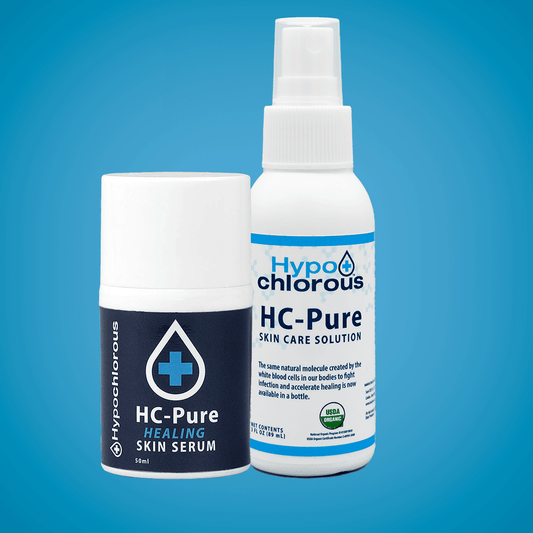
Hypochlorous Company is built around a more practical idea: advanced chemistry can be tough on germs without making your home feel like a chemical aisle. The right formula gives you a reliable option for everyday surfaces while helping reduce the clutter and second-guessing that come with owning a separate product for every room.
Start where your family touches most. A dependable non toxic surface disinfectant spray belongs within reach, not hidden away for emergencies - because the safest cleaning habit is the one you can use confidently, every day.