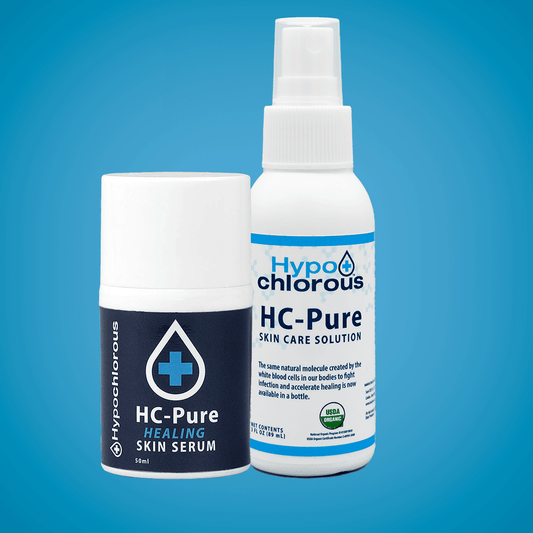
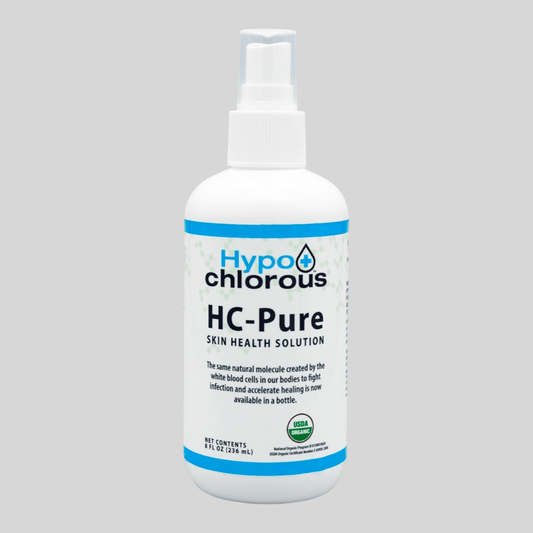
A bottle of hypochlorous acid can simplify your cabinet fast - but only when you use the concentration intended for the job. This hypochlorous acid dilution guide explains what dilution changes, when it makes sense, and why adding water is not always the safer or smarter move.
HOCl is the same germ-fighting molecule produced by your immune system. In a properly formulated product, it offers powerful cleaning and hygiene support without the harsh fumes, heavy fragrance, or residue associated with many conventional cleaners. Still, concentration matters. A solution made for hard-surface disinfection is not automatically the right strength for skin, toys, food-contact surfaces, or a pet's favorite bed.
What Dilution Means for Hypochlorous Acid
Dilution lowers the concentration of hypochlorous acid in water. That concentration is commonly measured in parts per million, or ppm. A 500 ppm solution contains more available HOCl than a 100 ppm solution, but more is not automatically better for every use.
The right strength depends on what you are cleaning, the product's intended purpose, and the contact time needed to do the work. Higher concentrations may be appropriate for certain hard-surface cleaning applications. Gentle, skin-focused formulas are designed differently. The goal is not to create the strongest possible spray. It is to use a stable, effective solution that fits the surface or routine in front of you.
This is where many households get tripped up. People are used to stretching concentrated cleaners with water or making a stronger mix when a mess looks serious. With hypochlorous acid, that habit can reduce performance, shorten usable shelf life, or take a product outside the directions that support its claims.
Start With the Label, Not a Guess
If your HOCl product says ready to use, use it as-is. Do not dilute it simply because it looks like water or has no harsh chemical smell. A ready-to-use formulation has been designed around a specific concentration, pH range, packaging, and intended application.
This matters most with products carrying disinfecting directions. The label tells you the surfaces it is intended for, how long the surface should remain wet, and whether pre-cleaning is needed. Changing the ratio can mean the product no longer performs as tested. For germ-killing claims, the label is the authority.
The same rule applies to skin and personal-care sprays. If a formula is made for face, body, or sensitive-use routines, there is rarely a reason to dilute it at home. Adding tap water introduces variables such as minerals, microbes, and pH changes. It can also make a carefully balanced product less predictable.
When Diluting HOCl Can Make Sense
Dilution can be useful when you are working with a true concentrate and the manufacturer specifically provides mixing instructions. It may also be appropriate when a product is sold for refill systems that clearly state the correct water-to-concentrate ratio.
Follow those directions exactly. Use clean measuring tools and the type of water specified by the manufacturer. If no water type is listed, do not assume that hot tap water is fine. Heat and contamination can affect hypochlorous acid stability. Cool, clean water is generally the safer handling choice, but the product instructions always come first.
There is another practical reason to avoid casual dilution: a weaker solution may still look and smell exactly the same. You cannot judge ppm by appearance. A diluted bottle may feel like a smart way to make your supply last longer, yet it may no longer deliver the cleaning or disinfecting performance you expect.
Hypochlorous Acid Dilution Guide: Understand the Math
When a manufacturer provides a target ppm and confirms that dilution is appropriate, the basic calculation is straightforward:
Starting concentration × amount of concentrate = target concentration × final volume
This is often written as C1 × V1 = C2 × V2. C1 is the starting ppm, V1 is the amount of product to use, C2 is your desired ppm, and V2 is the total final amount you want to make.
For example, suppose a manufacturer-approved concentrate is 500 ppm and its instructions call for a 100 ppm working solution. To make 16 ounces of finished solution, divide the target concentration by the starting concentration: 100 divided by 500 equals 0.2. That means 20% of your final mixture should be concentrate.
For a 16-ounce bottle, use 3.2 ounces of concentrate and add clean water until the total volume reaches 16 ounces. Do not add 16 ounces of water to 3.2 ounces of concentrate, because that creates more than 16 ounces of finished product and changes the ratio.
This math is helpful, but it should never replace product directions. A concentration can be chemically possible and still not be recommended for a particular formula or use. If your bottle does not identify its starting ppm or give dilution instructions, treat it as ready to use.
Match the Solution to the Job
For everyday household cleaning, a ready-to-use hard-surface HOCl spray can be an easy upgrade for high-touch areas such as counters, faucets, doorknobs, garbage can lids, and bathroom fixtures. Remove visible soil first when needed, then apply enough product to thoroughly wet the surface for the contact time on the label.
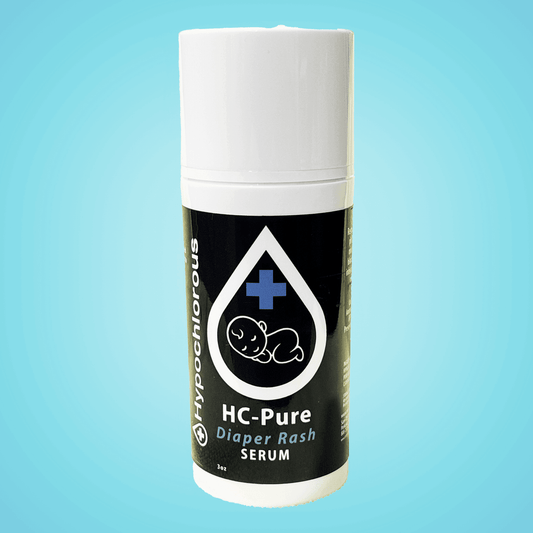
For baby items, pet areas, and food-contact surfaces, choose a product specifically labeled for those uses and follow its rinse instructions, if any. “Non-toxic” does not mean every formula is interchangeable. A product intended for a countertop may not carry directions for a pacifier, while a gentle toy-safe spray may not be intended to replace a registered disinfectant in every situation.
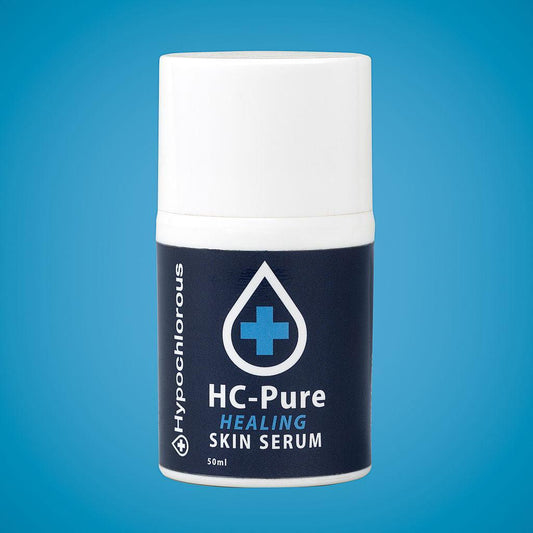
For skin, use a skin-specific hypochlorous acid product. The face, eyelids, irritated skin, and post-workout routines deserve a formula designed for personal care, not a multipurpose cleaner transferred into a smaller bottle. This is a simple boundary that protects both comfort and confidence.
What Not to Mix With HOCl
Hypochlorous acid works best when it is allowed to be itself. Do not mix it with bleach, vinegar, ammonia, hydrogen peroxide, alcohol, essential oils, fragrance additives, or another cleaner. Combining products can change the pH, reduce available HOCl, create irritating vapors, or produce an unpredictable solution.
Avoid pouring HOCl into a bottle that previously held another cleaner unless that bottle has been thoroughly cleaned and is appropriate for the formula. Residue from conventional chemicals can interfere with performance. When in doubt, use the original bottle or a clean, dedicated container.
Also avoid using a diluted mixture as a long-term refill. Once you add water, you have changed the formulation and increased the chance of contamination. Make only the amount approved for immediate use, label it clearly, and discard it according to the manufacturer's guidance.
Storage Protects Performance
Hypochlorous acid is effective, but it is not invincible. Light, heat, and time can gradually reduce its available strength. Keep the cap closed, store it away from direct sun and high heat, and do not leave it in a hot car, steamy windowsill, or outdoor shed.
The bottle matters, too. Light-protective packaging helps preserve product quality. Decanting into a clear, unmarked bottle may be convenient, but it can expose the solution to more light and make it easier to confuse with something else. For a family-safe home, clear labels and proper storage are part of the clean routine.
If a product has passed its expiration date, has been stored poorly, or you are unsure how it was diluted, replace it rather than relying on a guess. HOCl should make home care easier, not turn it into a chemistry experiment.
A smarter cleaning routine is not about using more product or chasing the highest ppm. It is about choosing the right HOCl formula, using it at its intended strength, and giving your family, pets, and home the protection of a cleaner you can feel good about reaching for every day.