That “clean” smell lingering in your kitchen or bathroom may not be proof that your home is cleaner. Often, it is added fragrance or the residue of harsh ingredients designed to feel powerful. A guide to low toxicity cleaning starts with a better standard: products should handle real-life messes and germs without turning every cleaning task into unnecessary chemical exposure for your family, pets, or sensitive skin.
Low toxicity cleaning is not about accepting less effective results. It is about choosing the right chemistry for the job, using it correctly, and cutting out the products that add fumes, dyes, heavy fragrance, or overly aggressive ingredients to your everyday routine.
What low toxicity cleaning really means
A low toxicity cleaning routine reduces avoidable exposure to substances that can irritate the eyes, lungs, and skin or leave strong residues on the places your family touches most. Think high chairs, counters, dog beds, bathroom sinks, laundry, and the handles everyone reaches for all day.
It does not mean every ingredient is “natural,” and it does not mean you need to clean with only vinegar and hope for the best. Natural ingredients can still be irritating, while some science-backed formulations are remarkably gentle when used as directed. The smarter question is: Does this product do what I need it to do without bringing unnecessary hazards into my home?
For everyday use, look for products with straightforward ingredient information, clear instructions, and a purpose you can understand. Be cautious with heavily fragranced sprays, chlorine bleach, ammonia, and products that leave you coughing, reaching for gloves, or opening every window. Those products may have a place in limited, specific situations, but they do not need to be the default for every spill and surface.
Start by replacing the products you use most
The fastest way to make a meaningful change is not to throw out everything under the sink at once. Start with the products you use repeatedly, especially in small or poorly ventilated spaces. A bathroom spray used several times a week has a bigger impact on your routine than a specialty cleaner you reach for twice a year.
Focus first on your all-purpose cleaner, disinfecting spray or wipes, bathroom cleaner, laundry additive, and pet-area cleaner. These categories often overlap more than brands would like you to think. One versatile, low-toxicity option can reduce bottle clutter while making it easier to clean consistently.
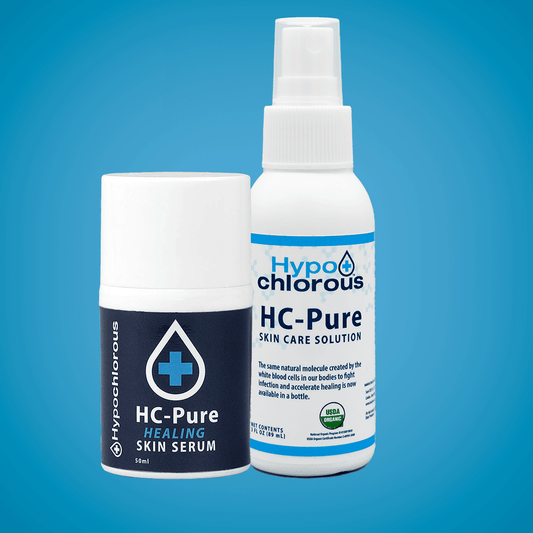
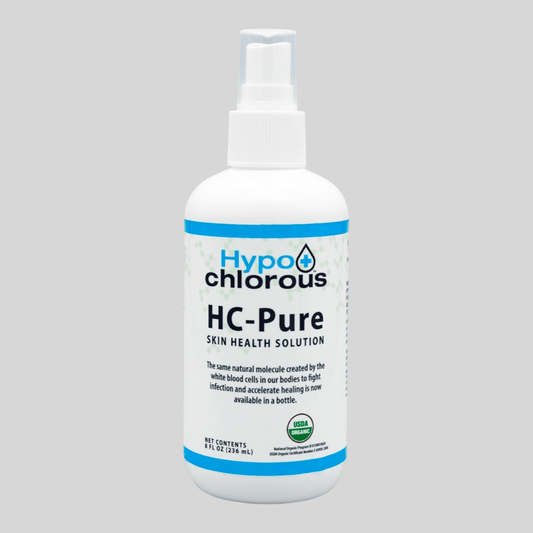
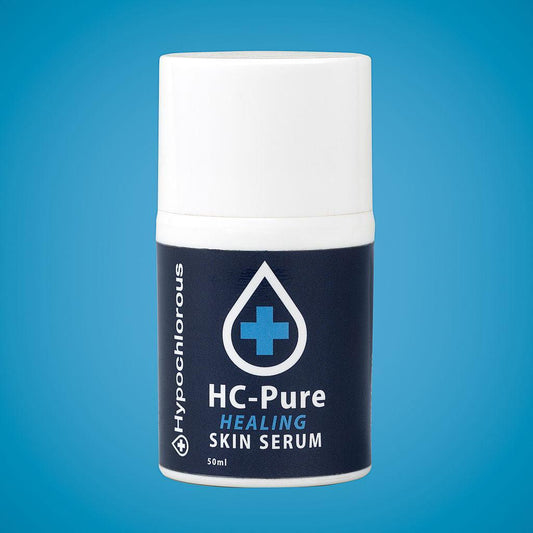
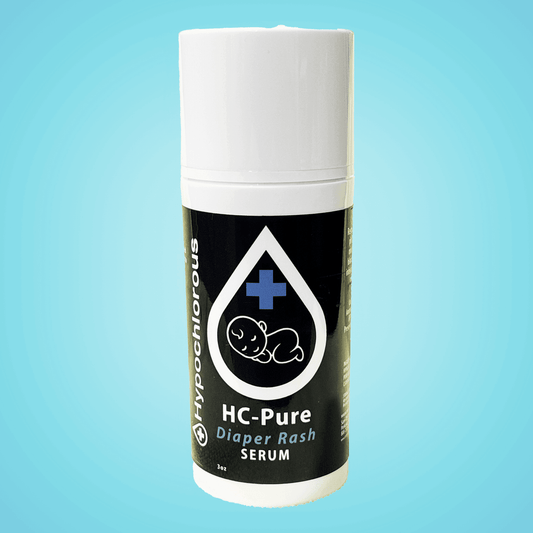
Hypochlorous acid, often called HOCl, is a strong example of modern cleaning chemistry made practical. It is a molecule produced naturally by the body’s immune system and can be formulated for household hygiene, skin, pet, and oral-care uses depending on the product. It offers effective germ control without the heavy fragrance or harsh fumes associated with many conventional cleaners.
That versatility matters. A product that is appropriate for a kitchen counter, baby gear, pet areas, and frequently touched surfaces can simplify your cabinet and your decision-making. Still, always follow the label for the intended use. A surface disinfectant and a skin product may use the same hero ingredient, but their directions and claims are not automatically interchangeable.
Clean first, then disinfect when it makes sense
One of the most useful changes in a low-toxicity routine is learning the difference between cleaning and disinfecting. Cleaning removes visible dirt, grease, crumbs, and grime. Disinfecting targets certain germs on a surface. They are related, but they are not the same job.
If a cutting board is covered in food residue or a bathroom sink has toothpaste buildup, remove the soil first. Disinfectant works best on a surface that is already clean enough for the active ingredient to make contact. Spraying over grime and immediately wiping it away may make a surface look better, but it may not deliver the germ-control result you expect.
You also do not need to disinfect every object after every touch. For most households, regular cleaning is enough for low-risk surfaces. Reserve disinfecting for high-touch areas during illness, after handling raw meat, around bathrooms, after accidents, or when someone in the home is more vulnerable to infection. This approach saves product, reduces overexposure, and keeps the routine realistic.
Respect contact time
Every disinfecting product has a contact time, meaning the surface needs to stay visibly wet for a stated period before wiping or air drying. This detail is easy to miss, but it is where efficacy lives. Read the label instead of assuming that one quick mist does the job.
More product is not necessarily better. The right amount, used on the right surface for the required time, is what delivers results. Low toxicity cleaning is thoughtful cleaning, not panic cleaning.
Read labels like the person protecting your home
Marketing terms can be helpful, but they are not a full safety profile. “Green,” “plant-based,” and “clean” are not guarantees that a product is non-irritating or effective. Turn the bottle around and look for useful specifics: the active ingredient, intended surfaces, directions, warnings, and whether fragrance has been added.
For disinfectants, check that the product is registered for the claims it makes and use it only as directed. For products intended for skin, oral appliances, baby items, or pet care, choose formulations explicitly made for those uses. A cleaner being low toxicity does not make every cleaner safe to ingest, mix, or use everywhere.
There is one rule with no exceptions: never mix cleaning products. In particular, do not combine bleach with ammonia, acids, vinegar, or other cleaners. Dangerous gases can form quickly. If you are switching products, rinse the surface and allow it to dry before using something new.
Build a lower-toxicity routine room by room
Your kitchen needs two kinds of care: removing food messes and managing high-risk moments. Wipe counters, appliance handles, and the table regularly with a multipurpose low-toxicity cleaner. After raw meat preparation, clean away residue first, then use an appropriate disinfectant according to its label. Wash produce under running water, not with household cleaning sprays.
In the bathroom, moisture is the main challenge. Frequent, light cleaning prevents soap scum and mildew from becoming a major project that requires aggressive products. Wipe the sink, toilet handle, faucet, and shower-touch points routinely. Run the exhaust fan or open a window after showers to reduce moisture at the source.
For floors and pet areas, start with physical cleanup. Vacuum hair, sweep debris, and blot accidents before applying a cleaner. Fragrance can be especially overwhelming around pets, whose noses are far more sensitive than ours. Choose products meant for pet environments, allow surfaces to dry, and follow directions for fabrics, bedding, and hard floors.
Laundry deserves the same mindset. You do not need intense fragrance to get clean clothes. Use the right amount of detergent, avoid overloading the machine, and address sweat, spills, or odors promptly. A compatible low-toxicity laundry booster can be useful when you want added freshness or hygiene support without building a routine around harsh additives.
Know the trade-offs without giving up performance
Low toxicity does not mean zero precaution. Even gentle products should be stored out of reach of children, used according to directions, and kept away from eyes unless the label specifically says otherwise. Some surfaces also need special care. Natural stone, unfinished wood, electronics, and delicate fabrics may require a product or method chosen for that material.
There are situations where stronger chemistry may be appropriate, such as serious mold remediation, major sewage contamination, or professional-grade sanitation needs. Those are not everyday cleaning jobs. When the risk is high, follow public-health guidance, use the required protective equipment, and consider professional help rather than escalating your usual household routine.
The goal is not to fear every cleaner. It is to stop treating harshness as proof of effectiveness. A product can be powerful against germs and still be a more sensible choice for the places where your baby crawls, your dog naps, and your family gathers.
Make the safer choice easy to repeat
The best low-toxicity routine is the one you will actually keep. Put your go-to cleaner where you use it, keep reusable cloths accessible, and make quick wipe-downs part of the moments already built into your day. Clean the counter after dinner. Wipe bathroom touchpoints while the sink is still wet. Treat pet messes before they set.
A simpler cabinet creates a simpler habit. When you trust the product in your hand, you are more likely to use it consistently and less likely to reach for the harshest option out of habit. That is how a healthier home gets built: one ordinary, well-chosen cleaning decision at a time.