A disinfectant should not make your kitchen smell like a public pool or leave you wondering whether it is safe to use around a crawling baby. That is why the question of hypochlorous acid vs bleach matters far beyond the cleaning aisle. Both can kill germs, but they perform very differently in a real home where pets nap on the floor, kids touch every surface, and life does not pause for a deep-cleaning protocol.
Bleach has been the default heavy-duty disinfectant for generations. Hypochlorous acid, often called HOCl, offers a more modern approach: powerful germ control with a profile designed for sensitive, everyday environments. The right choice depends on the job, the product label, and how you want your home to feel after you clean.
Hypochlorous Acid vs Bleach: The Core Difference
Bleach is usually sodium hypochlorite, a highly alkaline chemical that releases chlorine-based compounds in water. It is effective against many bacteria, viruses, and fungi when diluted and used correctly. It is also associated with sharp fumes, surface compatibility concerns, discoloration, and strict handling instructions.
Hypochlorous acid is a different chlorine-based molecule. It is also biologically familiar: your white blood cells naturally produce HOCl as part of the body’s immune response against pathogens. In commercially formulated household products, HOCl can provide broad antimicrobial performance at concentrations intended to be gentler for daily use.
That distinction matters. “Chlorine-based” does not mean the products are interchangeable. A bottle of household bleach and a properly formulated hypochlorous acid spray differ in pH, concentration, odor, practical applications, and safety instructions. Comparing them only by their active chemistry misses what families actually need: something effective enough for frequent messes and comfortable enough to use frequently.
Germ-Killing Power Is Not a Simple Strength Contest
Bleach has a long track record in institutional cleaning because it can disinfect hard, nonporous surfaces when used at the proper dilution and contact time. It may still be called for in specific situations, especially when a public-health authority, school, healthcare setting, or product manufacturer directs its use.
But high concentration is not the same as better everyday cleaning. Stronger chemicals can create more trade-offs. Bleach must be mixed carefully, used with ventilation, and kept away from fabrics, metals, and many finished surfaces. It can also be easy to use incorrectly, whether that means diluting it too much, wiping it away before the required contact time, or mixing it with another cleaner.
Hypochlorous acid works differently. Its germ-killing activity is tied to its ability to disrupt microbial cell structures and essential functions. The exact performance depends on the formulation and the organism being tested, which is why labels matter. An EPA-registered HOCl disinfectant should be used according to its approved directions, including the stated contact time and the surfaces it is designed to treat.
For everyday household use, the practical advantage is significant: HOCl gives families a way to disinfect common touchpoints without turning a five-minute cleanup into a chemical event. Think countertops, high chairs, bathroom fixtures, pet areas, trash can lids, doorknobs, and the surfaces that get cleaned repeatedly because real life is repetitive.
Safety Around Kids, Pets, and Sensitive Spaces
Bleach deserves respect. Direct contact can irritate or burn skin and eyes. Its vapors can be unpleasant or irritating, especially in small bathrooms, poorly ventilated rooms, or households with people who are sensitive to strong odors. It should be stored securely, never transferred to an unmarked bottle, and never mixed with ammonia, acids, vinegar, alcohol, or other cleaning products. Dangerous gases can result.
Hypochlorous acid is not a free pass to ignore directions, but it is designed for a more family-forward cleaning routine. High-quality formulations are low-odor and can be made without the harsh fragrance and heavy residue that cause many shoppers to look beyond conventional cleaners.
For parents, that can mean confidently cleaning a high-chair tray before lunch without worrying that the room now smells harsh. For pet owners, it can mean refreshing crates, bowls, litter-area surfaces, and muddy paw zones without adding an overwhelming chemical scent. For anyone managing sensitive skin or scent sensitivity, a simple formula can reduce one more source of unnecessary exposure in the home.
There is an important boundary: not every hypochlorous acid product is intended for skin, oral-care accessories, food-contact surfaces, or animal use. Use the product that is formulated and labeled for the task. A surface disinfectant belongs on surfaces unless its label specifically says otherwise.
Fumes, Residue, and the Reality of Daily Cleaning
Many people tolerate bleach because it feels familiar, not because it fits their lifestyle. The smell may signal “clean” to some households, but a strong odor is not proof of better cleaning. In fact, it can be a reason to open windows, clear a room, or avoid using the product around children and pets.
Bleach can also leave behind practical headaches. It may discolor towels, damage clothing, dull certain finishes, corrode metals, and weaken some materials with repeated use. It is often not the product you reach for when you want to quickly clean a child’s toy, a yoga mat, a pet carrier, or a refrigerator handle several times a day.
Hypochlorous acid is built for those in-between moments that make up most home hygiene. It is typically water-based, has little to no harsh smell, and can simplify a cabinet crowded with separate sprays. That does not mean every HOCl formula is compatible with every surface. Always check the label, especially for electronics, unfinished wood, natural stone, and delicate materials.
The goal is not to treat every spill like a hazardous-materials incident. The goal is to have an effective cleaner you will actually use consistently.
When Bleach May Still Make Sense
A safer daily alternative does not require pretending bleach has no place at all. There are situations where bleach may be required or specifically recommended, such as certain disaster cleanup protocols, sewage contamination, or directions from local health authorities. Some heavily stained white laundry items may also be compatible with bleach, provided the fabric-care label allows it.
The key is to be precise. Use bleach when a specific situation calls for bleach, not by default for every countertop, toy, or routine bathroom refresh. It is a specialized tool, not necessarily an all-purpose lifestyle product.
If you do use it, follow the label exactly. Wear appropriate protection when needed, ensure ventilation, keep children and pets away until surfaces are dry as directed, and never combine it with another product. More bleach is not better, and improvised chemical combinations are never a smart shortcut.
How to Choose the Right Cleaner for the Job
Start with the purpose. If you are removing visible grease or food residue, clean the surface first. Disinfectants work best on surfaces that are not covered in grime. If you need to disinfect, choose a product with directions that match the surface and the germ claim you need, then allow the full contact time.
For everyday touchpoints and family spaces, hypochlorous acid is often the smarter default because it combines strong hygiene support with a lower-drama routine. You can use it where life happens most: around kids, pets, bathroom surfaces, kitchen surfaces, gym gear, and frequently handled items.
Look for transparent labeling. An EPA registration is relevant when you are buying a product for disinfecting claims. For skin-focused or oral-care applications, look for instructions that clearly identify those uses. Avoid assuming that a product is safe for every purpose simply because it contains HOCl.
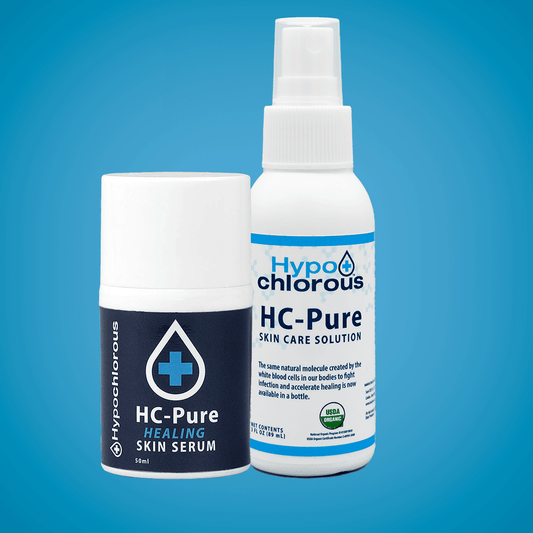
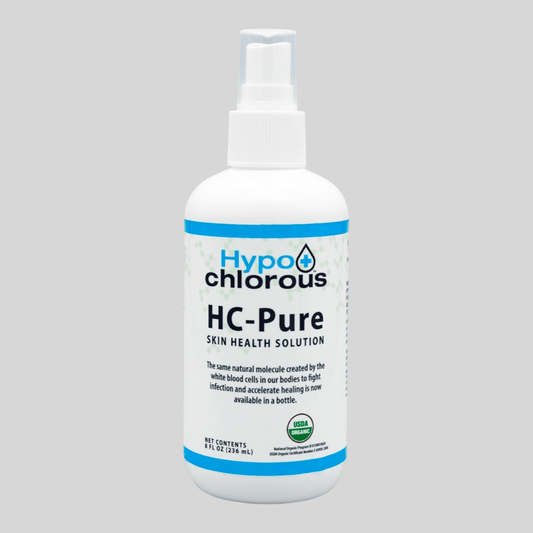
At Hypochlorous Company, that practical versatility is the point: replacing a shelf full of harsh, single-purpose products with thoughtfully formulated HOCl solutions made for the places, people, and routines you care about most.
The Better Default for a Lived-In Home
The bleach bottle may still belong in a carefully chosen, occasional role. But it does not need to define your everyday cleaning routine. When you want dependable germ control without harsh fumes, intimidating handling, or constant second-guessing around family spaces, hypochlorous acid gives you a more considered option.
Choose the product that matches the task, follow its label, and make your home hygiene routine easier to keep. A cleaner home should feel like peace of mind, not a chemical compromise.