A kitchen counter after raw chicken. A toddler’s dropped pacifier. A dog bed that needs freshening. These are the real-life moments behind the hypochlorous acid vs alcohol question. You want something that works against germs, but you also do not want every clean-up to leave behind strong fumes, dry hands, or a product you have to keep far from kids and pets.
Alcohol has earned its place in first-aid kits and hand sanitizers. But for everyday home hygiene, it is not automatically the best fit. Hypochlorous acid, often called HOCl, offers a different kind of protection: powerful antimicrobial performance in a formula designed to be gentler for the places and people you care about most.
Hypochlorous Acid vs Alcohol: The Core Difference
The biggest difference is not simply which ingredient kills more germs. It is how each one fits into daily life.
Alcohol products typically use ethanol or isopropyl alcohol at concentrations high enough to disrupt the outer structure of many bacteria and viruses. They act quickly, evaporate fast, and are especially useful when soap and water are unavailable for hands or when a small, compatible surface needs a quick wipe-down.
Hypochlorous acid is a molecule your own immune system produces as part of its defense against invading microbes. In cleaning products, it is made by converting water, salt, and electricity into a stable solution. HOCl attacks germs through oxidation, helping damage the structures they need to survive.
That biological familiarity matters. A properly formulated hypochlorous acid product can deliver serious germ control without relying on heavy fragrance, harsh solvents, or the sharp chemical experience many families are trying to leave behind.
Where Alcohol Still Makes Sense
Alcohol is not the enemy. It is simply specialized.
An alcohol-based hand sanitizer can be useful while traveling, after touching shared public surfaces, or when there is no sink nearby. For hands that are visibly dirty or greasy, though, soap and running water remain the better choice. Alcohol is also commonly used to prep intact skin before certain procedures, when directed by a healthcare professional.
Its drawbacks become clearer with repeated use at home. Alcohol can dry out skin, especially on hands already dealing with frequent washing, cold weather, eczema, or sensitivity. It is flammable, can have a strong odor, and evaporates so quickly that it may not remain wet on a surface long enough to meet a disinfectant label’s required contact time.
It can also be a poor match for some materials. Repeated alcohol exposure may dull finishes, damage certain plastics, dry leather, or affect coated surfaces. Always follow the care instructions for electronics, furniture, and specialty materials.
Why HOCl Fits More Everyday Jobs
Hypochlorous acid is built for the overlap between clean home and healthy home. It can be used on many hard, nonporous surfaces, including high-touch areas such as doorknobs, light switches, counters, bathroom fixtures, and trash can lids, when the product label allows it.
The advantage is practical: you can reach for one thoughtfully formulated cleaner across more of your routine instead of keeping separate harsh products for every room. For parents, that can mean cleaning a high chair tray or toy without turning the room into a cloud of perfume. For pet owners, it can mean refreshing pet areas without the lingering solvent smell that makes everyone retreat.
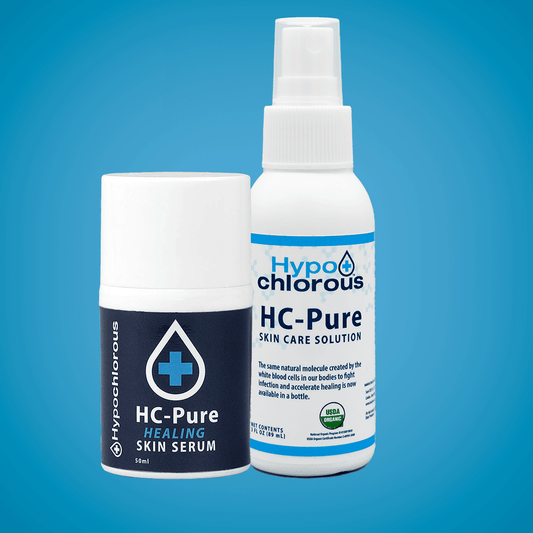
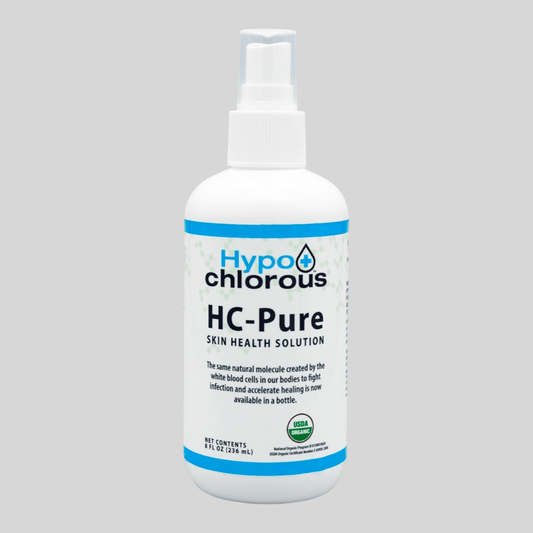
Some HOCl products are also formulated for skin or oral-care applications. Those uses are product-specific, not automatic. A surface disinfectant should be used only as directed for surfaces, and a skin mist should be used only as directed for skin. The right formula and label matter as much as the ingredient itself.
Efficacy Depends on the Label, Not Just the Ingredient
A common mistake is assuming every bottle containing alcohol or hypochlorous acid performs the same way. It does not.
For disinfecting claims, look for an EPA-registered product and follow its exact directions. That includes the organisms it is approved to address, whether pre-cleaning is needed, and the required contact time. A surface must stay visibly wet for that full period. Spraying and immediately wiping may clean away a mess, but it may not deliver the label’s stated disinfection result.
The same principle applies to alcohol. A 70% alcohol solution and a lightly alcohol-based household spray are not interchangeable. Higher percentage is not always better, either. Water helps alcohol penetrate and work effectively, which is why common antimicrobial alcohol formulas are not simply 100% alcohol.
For everyday cleaning, start by removing visible soil, food residue, grease, and grime. Then apply your germ-control product according to its label. Cleaning and disinfecting are related, but they are not identical jobs.
Safety Trade-Offs for Families and Pets
If you are building a lower-toxicity home, the question is not whether a product sounds natural. It is whether it delivers the performance you need with fewer unnecessary compromises.
Alcohol’s fast evaporation can be convenient, but it comes with flammability and drying potential. Keep it away from flames, heat sources, and curious children. Avoid spraying it into the air, near eyes, or onto sensitive skin unless the product is specifically made for that purpose.
Hypochlorous acid is non-flammable and generally better suited to sensitive-use environments when used as labeled. That is why it has become a smart alternative for families cleaning around baby gear, pet spaces, and frequently touched surfaces. Still, “gentler” does not mean careless. Keep all cleaning products out of reach of children, avoid direct eye contact unless a product is specifically intended for that area, and never ingest them.
Do not mix either ingredient with other cleaners. In particular, combining products containing chlorine-related ingredients, acids, ammonia, or unknown chemicals can create unsafe fumes or reduce performance. One product at a time is the safer, simpler approach.
What About Odor, Residue, and Storage?
Alcohol has a familiar medicinal smell that disappears quickly because the liquid evaporates. That can feel clean, but fragrance is not proof of disinfection. Its rapid dry-down may also be a limitation when a product needs time on the surface to work.
A quality HOCl solution may have a light pool-water-like scent, while others have very little noticeable odor. It should not leave the heavy perfume residue associated with many conventional sprays. For food-contact surfaces, follow the product label on whether a rinse is needed.
HOCl is sensitive to storage conditions. Heat, sunlight, and contamination can reduce its strength over time, so store it tightly closed in a cool, dark place and pay attention to the expiration date. Do not pour it into an unlabeled bottle or mix it with another product. Alcohol also needs proper storage, especially because of its flammability.
How to Choose for the Job in Front of You
Choose alcohol when you need a portable hand sanitizer, a clinician-directed skin-prep product, or a quick solution for a small compatible surface. It is a useful tool, just not a one-bottle answer for the whole house.
Choose hypochlorous acid when you want broad, frequent-use support around the home, especially in areas shared by children, pets, and sensitive family members. It is a compelling option for people who want to clean and disinfect with less harshness built into the routine.
For the strongest result, let the task guide you. Use soap and water for visibly dirty hands. Use an EPA-registered product when you need a disinfecting claim. Use the appropriate contact time. And select products made for the surface, skin, pet area, or dental accessory you are treating.
A safer home is not built by buying the harshest bottle on the shelf. It is built by choosing chemistry that earns a place in your everyday routine - effective enough for real messes, thoughtful enough for the people and animals living around them.